The Digital Frontline: Fact-Checking Kenya’s Social Media Supremacy and the Security Paradox
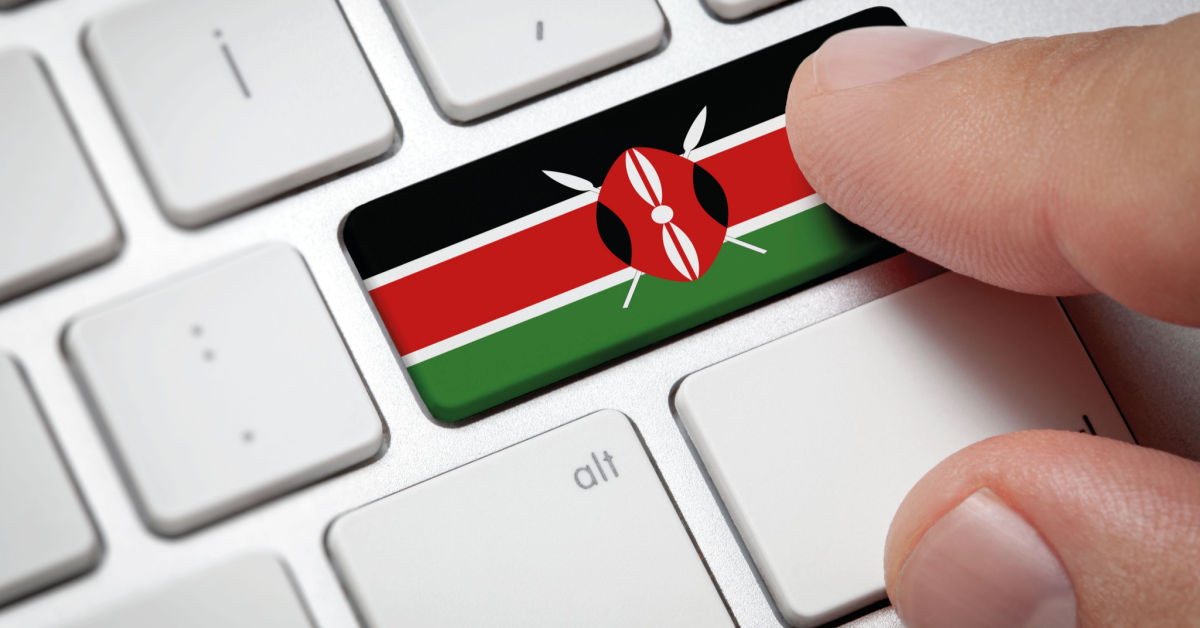
In a move that set keyboards ablaze across the 'Silicon Savannah,' President William Ruto recently declared Kenya the global leader in daily social media usage. While his claim that Kenyans spend an average of four hours online sparked an immediate hunt for data to verify the boast, it has opened a much deeper conversation regarding how this digital obsession is reshaping the nation’s political landscape and its national security architecture.
In Kenya, the thumb is mightier than the tongue, and a viral hashtag can move a mountain faster than a political manifesto.
The presidential pronouncement, made during a public address in late 2023 and reiterated in various digital transformation forums in 2024, positioned Kenya as a hyper-connected hub. President Ruto argued that the country’s high engagement rates are a testament to the success of the government’s digital highway project. However, global data collectors like 'We Are Social' and 'Meltwater' offer a more nuanced perspective. In their 2024 Global Overview Report, while Kenya ranks significantly high—often appearing in the top 10 globally—it frequently trails behind nations like Nigeria, South Africa, and Brazil, where daily usage often exceeds three and a half hours. Regardless of whether Kenya is officially number one or number three, the impact of this connectivity is undeniable. For an investigative writer in Nairobi, the story isn't just about the ranking; it’s about the transformation of the Kenyan phone from a communication tool into a potent political weapon. The 'four-hour' average mentioned by the President isn't just spent on entertainment; it is the engine room of modern Kenyan dissent and mobilization. This was most visibly demonstrated during the recent wave of youth-led protests against the Finance Bill 2024, where platforms like X (formerly Twitter), TikTok, and Instagram were used to organize, fundraise, and broadcast live events to a global audience in real-time. The rise of social media as a political tool has fundamentally altered the traditional 'baraza' style of politics. Previously, political influence was bought through rallies and mainstream media airtime. Today, a single viral video from a rural outpost can bypass traditional gatekeepers and reach millions. This shift has clearly unnerved the state. In his speeches, President Ruto has often walked a fine line: praising the digital economy as a source of jobs for 'hustlers' while simultaneously warning against the 'misuse' of these platforms to spread misinformation and destabilize the state. National security experts are now grappling with what they call the 'Digital Security Paradox.' On one hand, Kenya’s high social media usage drives innovation and financial inclusion through M-Pesa integrated services. On the other, the speed of information flow makes the country vulnerable to foreign influence operations and domestic polarization. The Kenyan Ministry of Interior has recently increased its surveillance capabilities, citing the need to curb 'cyber-terrorism' and 'fake news' that could incite ethnic tension. Critics, however, argue that 'national security' is frequently used as a euphemism for suppressing political opposition and stifling the very digital freedom the President boasts about on the world stage. Technologically, Kenya's high usage is fueled by one of the cheapest data rates in Sub-Saharan Africa and a burgeoning youth population. Over 80% of the population is under 35, a demographic that is 'digital native' and increasingly skeptical of traditional state narratives. This demographic doesn't just consume content; they fact-check in real-time. When the President claimed the top spot in global rankings, the 'Kenyans on X' (KOT) community was quick to pull up Statista graphs to verify the claim—a meta-demonstration of the very engagement the President was highlighting. As the government pushes for the 'Digital Superhighway,' aiming to lay 100,000km of fiber optic cable, the stakes for national security will only rise. The debate has now moved to the legislative halls, with discussions surrounding the Computer Misuse and Cybercrimes Act. The government insists stricter regulations are needed to protect the public from online predators and state enemies. Opponents argue that the law is being weaponized to target bloggers and activists who use their 'four hours a day' to hold the executive accountable. Ultimately, Kenya’s social media usage reflects a society in transition. Whether the four-hour mark is a badge of honor or a warning sign remains a matter of perspective. For the President, it is a sign of a modern, tech-savvy workforce. For the security apparatus, it is a chaotic frontier that requires policing. And for the citizens, it is the new town square where the future of the nation is being negotiated, one hashtag at a time. The 'Silicon Savannah' is no longer just a place for tech startups; it is a high-stakes arena where the digital and the physical collide, and where the next election may be won or lost not at the ballot box, but on the smartphone screen.