The Sh600 Insult: Inside the Nationwide Revolt Against the Teachers’ Pay Deal
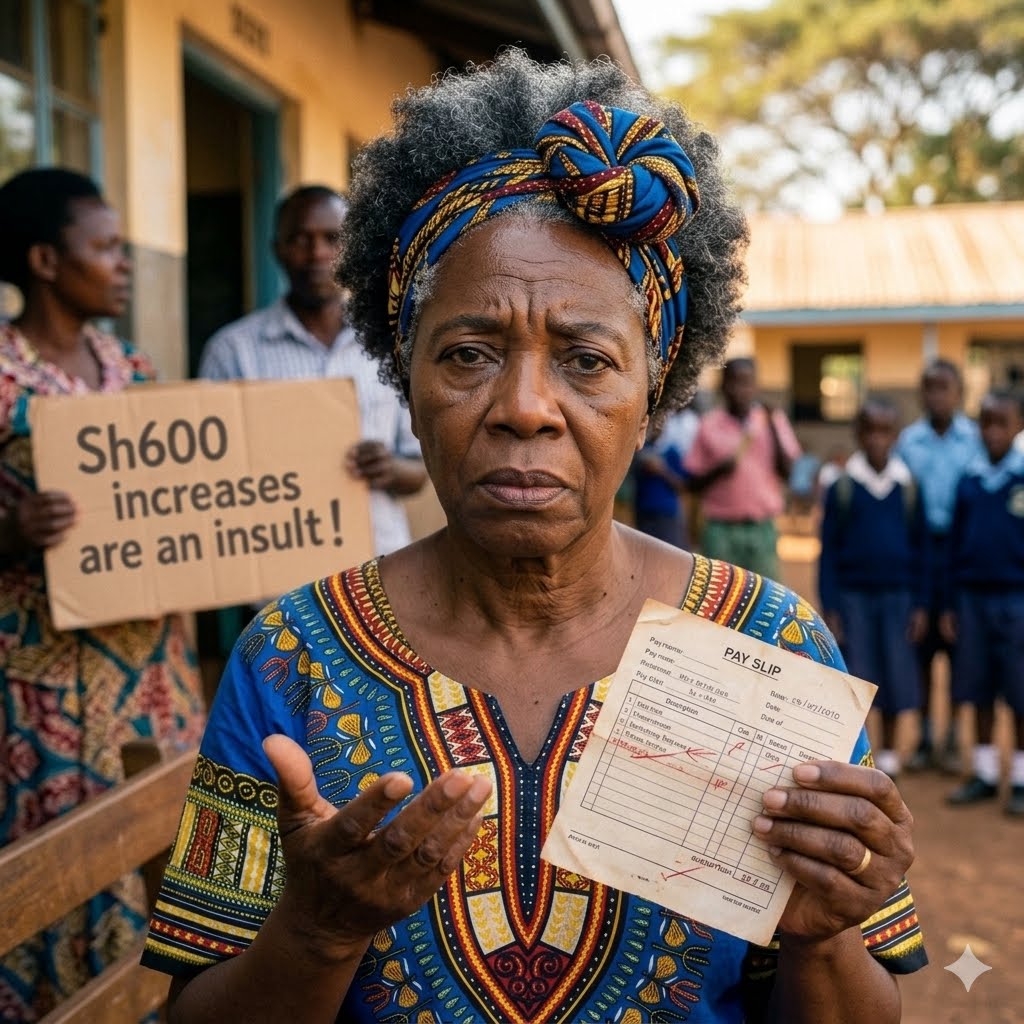
Kenya’s education sector is teetering on the edge of a total paralysis as a wave of discontent sweeps through staffrooms from Mandera to Mombasa. What was intended by the Teachers Service Commission (TSC) to be a celebratory implementation of the second phase of the 2021-2025 Collective Bargaining Agreement (CBA) has instead transmuted into a catalyst for industrial unrest. At the heart of the storm is a Sh8.4 billion allocation that, when trickled down to the individual level, leaves many educators with a net increase as low as Sh693—an amount teachers have dismissed as a 'mockery' in an era of hyper-inflation and punitive taxation.
When the government offers a pay rise that can’t even cover the cost of a Sunday chicken, they aren't rewarding educators; they are tipping us for our silence.
For the average Kenyan teacher, the arrival of the July and August payslips was expected to be a moment of financial reprieve. After months of grueling negotiations between the Teachers Service Commission and the two primary unions—the Kenya National Union of Teachers (KNUT) and the Kenya Post Primary Education Teachers (KUPPET)—the government signaled it would finally release the Sh8.4 billion required to fulfill the salary increment component of the CBA. However, as the digital slips landed in email inboxes, the mood in the staffrooms quickly soured from anticipation to outright fury. An investigative look into the payroll data reveals a stark reality. For lower-cadre teachers in Job Group B5, the 'historic' increment translates to a mere Sh693 after statutory deductions. Even for those in the higher echelons, such as Job Group D1, the net gain rarely exceeds Sh2,055. In a country where the price of a 2kg packet of maize flour fluctuates between Sh150 and Sh200, and a liter of petrol hovers near the Sh190 mark, teachers argue that this 'raise' is effectively swallowed by the cost of a single grocery run. The rejection of the increment is not merely a dispute over numbers; it is a manifestation of a deeper economic malaise. Since the CBA was first envisioned, the Kenyan fiscal landscape has shifted dramatically. The introduction of the 1.5% Mandatory Housing Levy, the transition from NHIF to the more expensive Social Health Insurance Fund (SHIF), and the upward adjustment of NSSF contributions have created a 'tax pincer' movement. Educators in Nairobi, who face some of the highest logistics and housing costs in the region, are particularly vocal. 'We are being told we have been given a raise, but our net pay is actually lower than it was two years ago because the government takes back with the left hand what it gives with the right,' says a secondary school teacher based in Kasarani who requested anonymity. On social media platforms, the hashtag #RejectTheCBA has gained significant traction. Teachers have been sharing screenshots of their payslips, highlighting the discrepancy between the government’s 'billions' and the individual’s 'shillings.' The digital revolt has put immense pressure on union leadership. Initially, both KNUT Secretary General Collins Oyuu and KUPPET’s Akelo Misori appeared inclined to accept the implementation to avoid a strike. However, the sheer volume of the rank-and-file's anger has forced a pivot. KUPPET has already issued a seven-day strike notice, demanding not just the fulfillment of the CBA, but a total overhaul of the salary scales to match the current inflation rate, which has eroded the purchasing power of the Kenyan Shilling by over 15% in the last two years. The political stakes are equally high. President William Ruto’s administration has consistently branded itself as a champion of the 'hustler' and the civil servant, pointing to the hiring of 56,000 new teachers as proof of its commitment to education. Yet, the Treasury’s insistence that there is 'no more money' to increase the Sh8.4 billion pot has created a narrative of an administration that is out of touch with the reality on the ground. Investigative trails suggest that while the TSC claims the budget is exhausted, teachers are pointing to recent reports of government waste and the high cost of maintaining the political class as evidence that the 'empty coffers' argument is a selective reality. In rural outposts, the sentiment is no different. In counties like Turkana and Marsabit, where teachers face hardship conditions and high transport costs to reach their stations, the Sh600 increment is viewed as an insult to their sacrifice. The unions are now demanding that the government go back to the drawing board to negotiate a 'living wage' rather than a 'survival pittance.' They are calling for a 30% to 50% basic salary increase, arguing that the current CBA was signed under vastly different economic conditions and is now obsolete. As the third term of the school calendar approaches—a critical period for national examinations (KCSE and KPSEA)—the threat of a strike looms like a dark cloud. Parents are caught in the middle, fearing that their children’s futures will be collateral damage in the fiscal war between the State and the staffroom. The TSC has attempted to de-escalate the situation by inviting union leaders to 'consultative' meetings, but the mandate from the teachers is clear: 'No significant money, no chalk.' The standoff over the Sh8.4 billion is a litmus test for the government's ability to manage its most vital human resource. If the stalemate continues, the 'negligible' increment may cost the country much more than just Sh2,000 per teacher; it could cost a generation their final term of learning. For now, the teachers of Kenya stand firm, their payslips serving as a damning indictment of a fiscal policy that they believe has left the mwalimu behind in the shadows of the 'Bottom-Up' economic agenda.